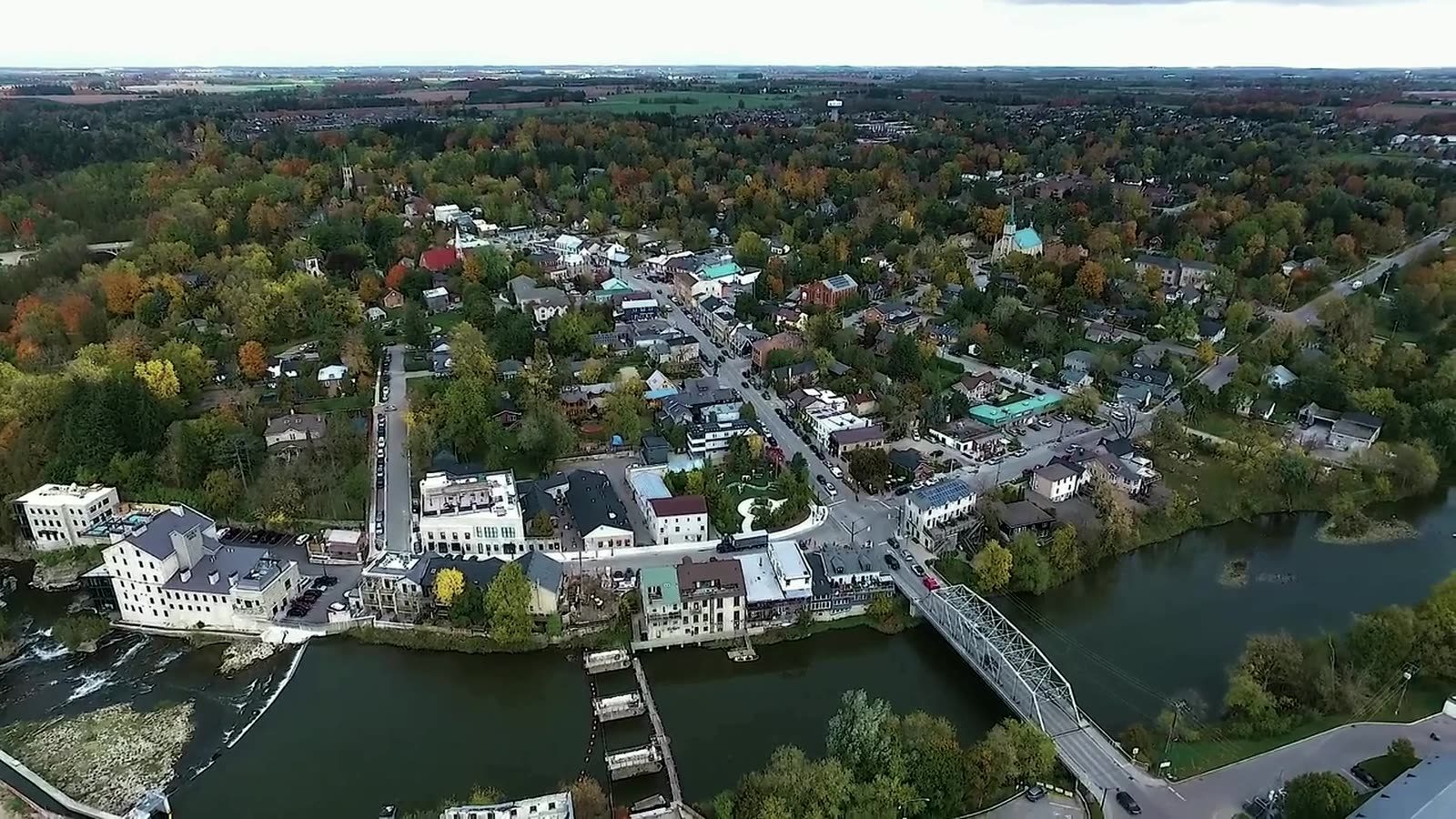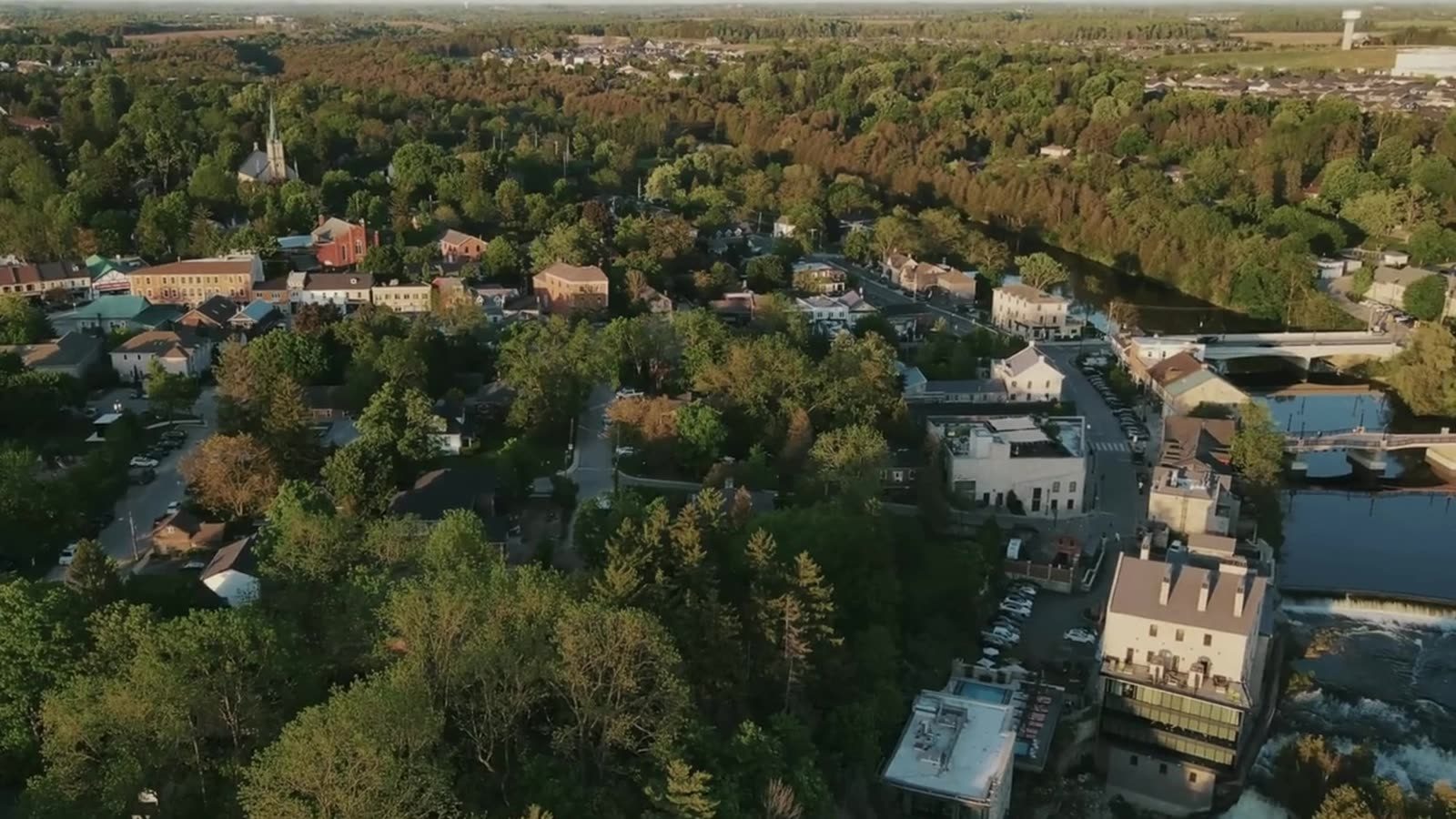

Grand Valley comes up more and more with buyers who started out looking at Elora and Fergus and then looked at what their money buys thirty minutes further up the river. It is worth taking seriously. It is also, quietly, a different place to buy a house.
The thing to understand first: it is not Wellington County
Elora, Fergus, Salem, Belwood and the rural sideroads around them are all one municipality — Centre Wellington, in Wellington County. Grand Valley is not. It is the Town of Grand Valley, in Dufferin County, formed in 1995 when the Village of Grand Valley amalgamated with the rural Township of East Luther, and renamed to its current form in 2012.
Practically, that means a different council, a different tax rate, a different building department and a different county planning framework. Every answer you have collected about permits, septic approvals or zoning in Centre Wellington stops being authoritative the moment you cross the line. This is the single most common thing buyers get wrong here, and it is an easy one to avoid: ask the Town of Grand Valley directly, not the Township of Centre Wellington.
What the town is actually like
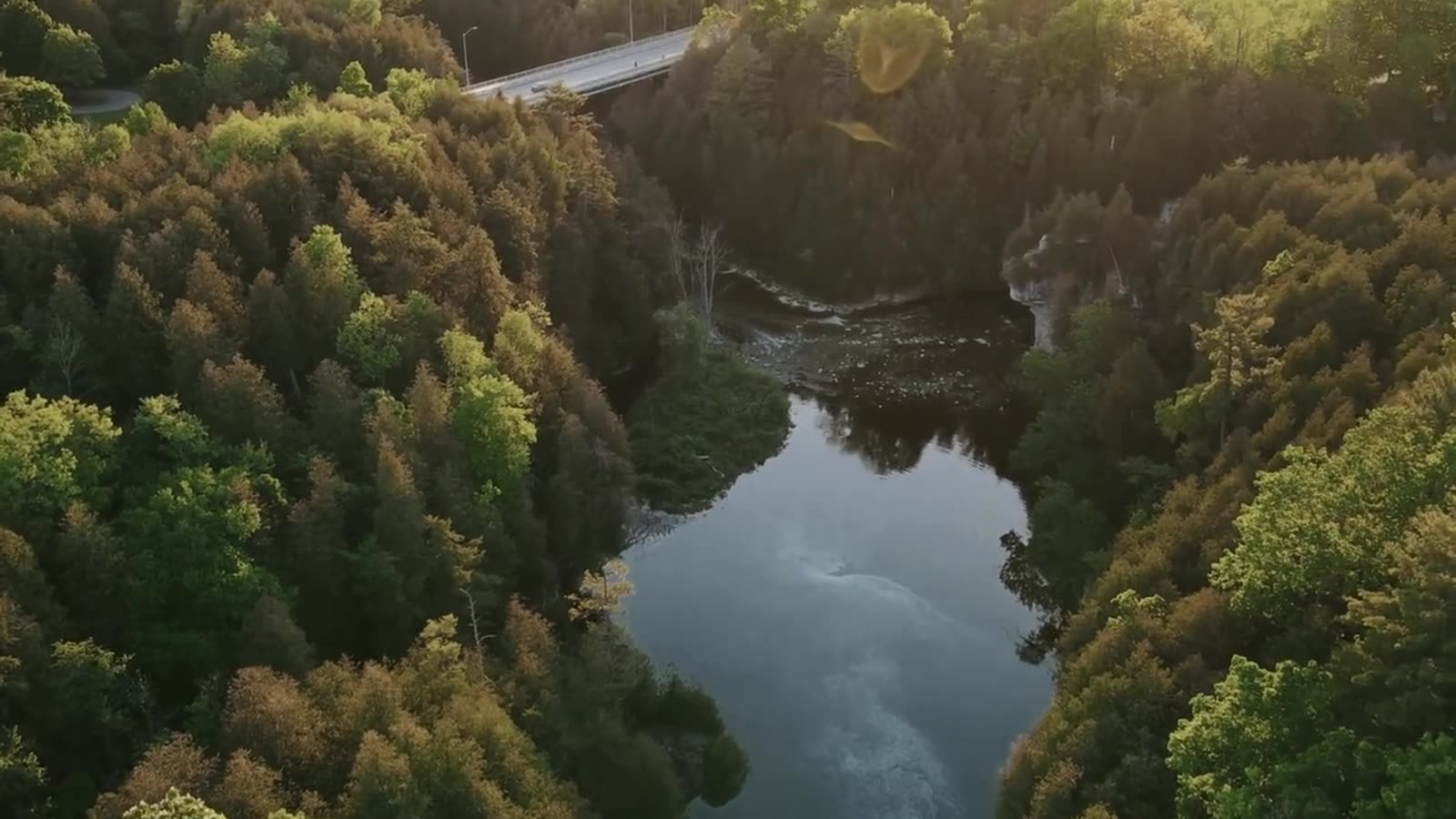
Small, agricultural, and genuinely scenic. The Grand River — a designated Canadian Heritage River — winds through the middle of town in tight serpentine bends. Over a hundred working farms surround it, some with farmgate businesses. Part of the Luther Marsh sits inside the municipal boundary: better than ten thousand acres of wetland including Luther Lake, managed by the Grand River Conservation Authority, and a serious destination for birders.
The town's own description of itself is "Nature's Playground," and the main street looks convincingly like another century — enough that it gets used as a film location.
For daily life, Orangeville is about fifteen minutes east and carries the hospital, the groceries and most of the errands. Brampton is roughly thirty-five minutes south, and Fergus about thirty minutes back down the river. That Brampton number explains a good deal of who has been buying here.
The growth is the whole story
The 2021 census counted 3,851 residents in Grand Valley, up more than thirty per cent from 2016. Provincial growth planning has the town sized toward roughly 7,000 by 2031. In other words, close to a doubling inside a decade, in a place with one main street.
Decide before you buy which side of that you are on.
- If you are buying for the quiet, that growth is the risk. Ask the Town where the approved and draft-approved plans of subdivision are, and specifically what is planned on the land adjoining whatever you are considering. A farm field beside your lot is not a permanent feature.
- If you are buying for the appreciation, that growth is the argument — and the new-build inventory means more choice than a town this size would normally offer.
Both are legitimate. What does not work is buying for the first reason without checking the second.
The inspection and diligence list
- Services. Inside the settlement area you are probably on municipal water and sewer. Outside it — and the great majority of the town's 158 square kilometres is outside it — you are on a private well and a septic system. Water potability and flow, septic age, bed location and pumping records all belong in the offer.
- Conservation authority regulated area. Grand River Conservation Authority jurisdiction runs along the river through town and around Luther Marsh, and it extends further than the visible bank. It governs building, grading and fill. Confirm before you plan an addition, a pool or a shop.
- Builder, on anything newer. In a fast-growing town, the difference between builders shows up in grading, drainage and window installation about five years after closing. Ask who built it. Go look at what else they built and how it has aged.
- Taxes. Get the actual annual figure for the specific property, and do not carry over an assumption from a Centre Wellington comparable. Different county, different rate.
- Schools and busing. Grand Valley is served by the Upper Grand District School Board — the same board as Elora and Fergus — but catchments and bus routes are their own question and are worth confirming for the exact civic address.
- The commute, tested. Drive it on a weekday at the hour you would actually leave. Highway 109 and the approaches to Orangeville do not behave on a Tuesday morning the way they behave on a Sunday afternoon showing.
How it compares to Centre Wellington
Generally, the same money goes further here than in walkable Elora, and often further than in Fergus. What you give up is the depth of amenity: Fergus has the hospital, the arena and the full range of services, and Elora has a main street that draws visitors from three counties. Grand Valley has a lovely street, a river, a marsh, and a fifteen-minute drive to almost everything else.
For some buyers that is exactly the trade they want. For others it turns out to be one drive too many, and they end up back in Fergus. Either answer is fine — but it is much cheaper to work it out before you make an offer than after.
Written by Alexa Keys, Salesperson with Coldwell Banker Neumann Real Estate, Brokerage. General information about the Centre Wellington market — not legal, tax or financial advice. Figures and municipal rules change; confirm current details with the relevant authority or your professional advisors before relying on them.